This Creamy Coconut Garlic Shrimp is a quick, flavorful dinner made with juicy shrimp, fragrant garlic, full-fat coconut milk, and a touch of red pepper flakes. The coconut sauce turns silky and rich in just 20 minutes, making this recipe ideal for busy weeknights when you want something satisfying without a long ingredient list. Serve it over jasmine rice, cauliflower rice, or roasted vegetables for an easy meal with a tropical-inspired flavor.
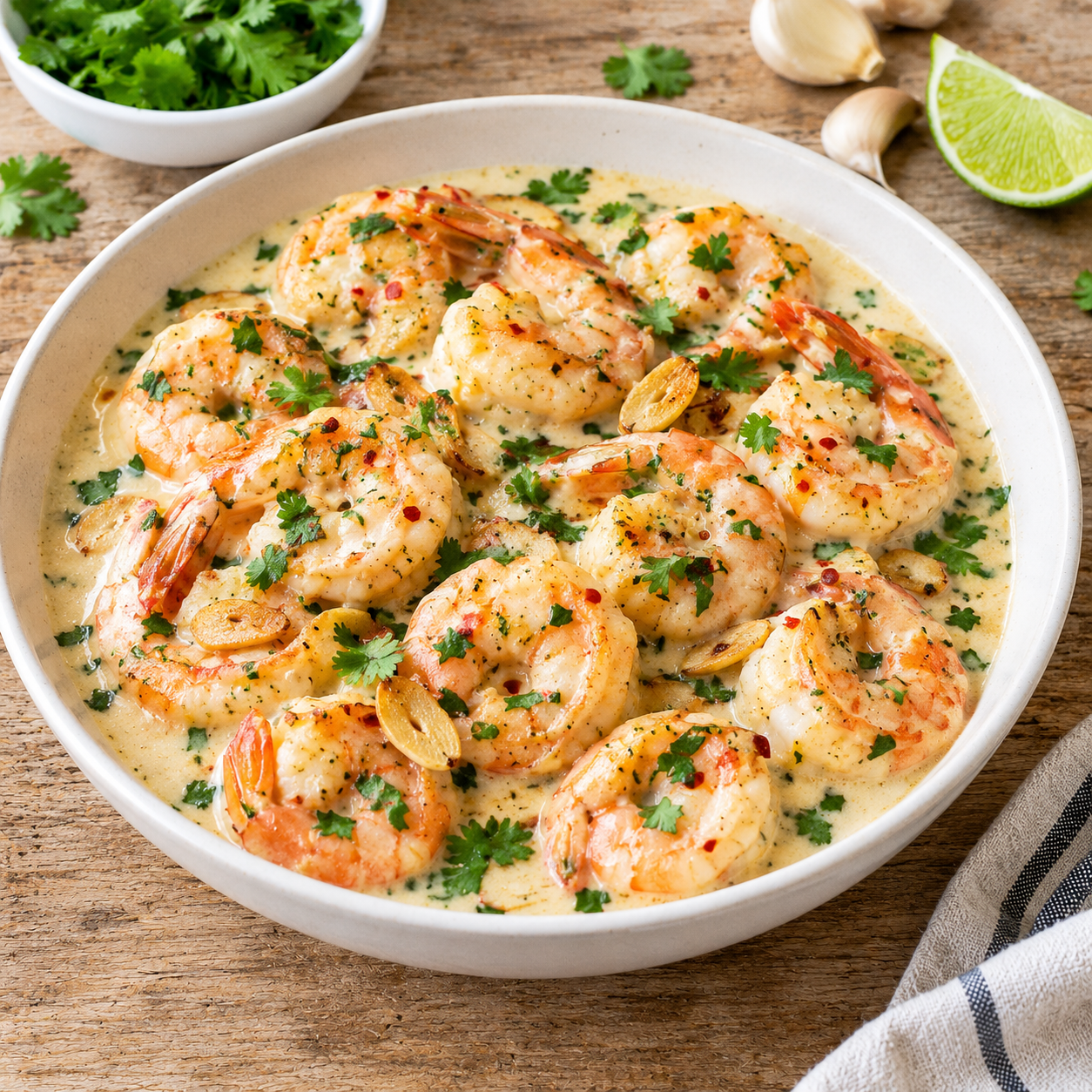
Quick facts
| Detail | Information |
|---|---|
| Prep Time | 10 minutes |
| Cook Time | 10 minutes |
| Total Time | 20 minutes |
| Servings | 4 |
| Difficulty | Easy |
| Course | Main Course |
| Cuisine | Tropical-inspired |
| Cooking Method | Skillet |
Why You’ll Love This Recipe
- Ready in 20 minutes: A quick preparation and short cooking time make it ideal for busy evenings.
- Creamy without dairy: Full-fat coconut milk creates a rich sauce without cream or butter.
- Packed with protein: Shrimp provides protein while keeping the meal relatively light.
- Simple ingredients: Garlic, coconut milk, oil, herbs, and shrimp create plenty of flavor.
- Easy to customize: Adjust the chili flakes, add ginger, or finish with fresh lime juice.
- Flexible serving options: Pair it with rice, noodles, steamed vegetables, or cauliflower rice.
Ingredients
The secret to this coconut garlic shrimp is using large shrimp, fresh garlic, and full-fat canned coconut milk. The shrimp cook quickly, while the coconut milk creates a smooth sauce that picks up the savory flavor left in the skillet.
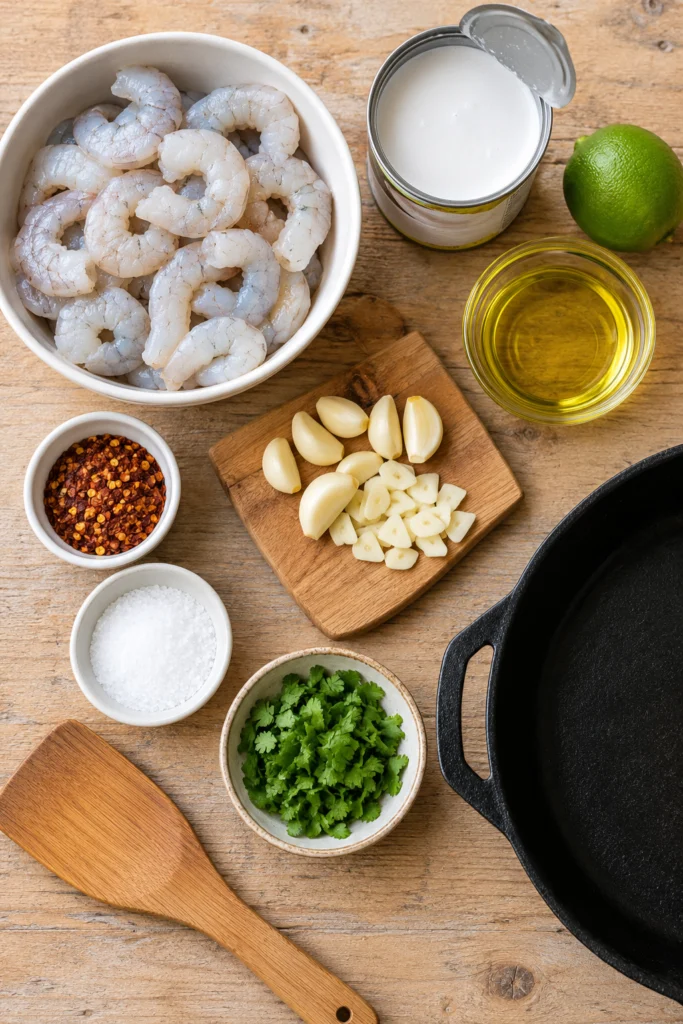
Ingredients and Measurements
| Ingredient | Quantity | Notes |
|---|---|---|
| Large shrimp | 1½ lb (680 g) | Peeled and deveined, preferably 16/20 count |
| Full-fat coconut milk | 1 can (13.5 oz / 400 ml) | Shake or stir before using |
| Garlic | 6 cloves | Thinly sliced |
| Avocado oil | 2 tablespoons | Divided as needed for cooking |
| Dried red chili flakes | ½ teaspoon | Adjust to taste |
| Fresh cilantro | ¼ cup, chopped | For garnish |
| Kosher salt | ½ teaspoon | Adjust to taste |
| Fresh lime juice | Optional | Adds brightness just before serving |
Ingredient Notes and Substitutions
Shrimp: Large shrimp are ideal because they stay plump and are easy to cook without becoming rubbery. Fresh or frozen shrimp work well. If using frozen shrimp, thaw them completely, drain well, and pat dry before cooking.
Full-fat coconut milk: Canned full-fat coconut milk gives the sauce its creamy consistency. Shake the can well or stir the contents to combine the coconut cream and liquid before measuring. Avoid coconut milk beverages sold in cartons, as they are usually much thinner.
Garlic: Freshly sliced garlic gives the sauce a fragrant, savory flavor. Slice it evenly so it cooks at the same rate. Minced garlic also works, but it can brown faster, so watch it carefully.
Avocado oil: This neutral-tasting oil works well for searing shrimp over medium-high heat. Light olive oil is another option. Ghee can also be used, though it adds a buttery flavor.
Red chili flakes: A small amount adds gentle heat. Reduce the quantity or leave them out for a milder dish. Add more if you enjoy a spicy garlic sauce.
Fresh cilantro: Cilantro adds freshness and color. Flat-leaf parsley can be substituted if you prefer its milder flavor.
Lime juice: A small squeeze of lime is optional but useful for balancing the richness of coconut milk. Add it at the end rather than boiling it into the sauce.
How to Make Creamy Coconut Garlic Shrimp
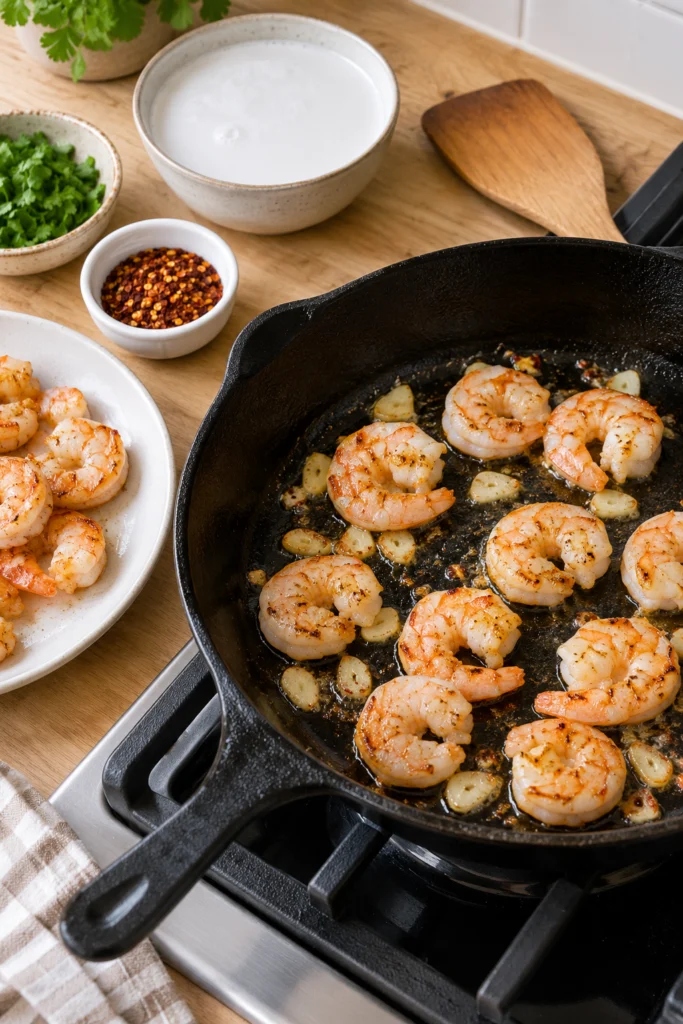
Step 1: Prepare and Season the Shrimp
If using frozen shrimp, thaw them completely and remove any remaining shells or veins. Pat the shrimp thoroughly dry with paper towels, then season with the kosher salt.
Dry shrimp sear more effectively and release less excess moisture into the skillet.
Step 2: Sear the Shrimp
Heat the avocado oil in a large skillet over medium-high heat. Add the shrimp in a single layer, working in batches if necessary.
Cook for approximately 1–2 minutes per side, depending on their size, until they turn pink and opaque. Transfer them to a clean plate. They will finish warming in the sauce, so avoid overcooking them at this stage.
Step 3: Sauté the Garlic
Reduce the heat to medium. Add a little more oil if the skillet looks dry, then add the sliced garlic.
Cook for about 30–60 seconds, stirring frequently, until the garlic becomes fragrant. Do not let it turn dark brown, as burnt garlic can make the sauce bitter.
Step 4: Add the Coconut Milk
Pour the full-fat coconut milk into the skillet. Stir with a wooden spatula, scraping up any flavorful browned bits from the bottom.
Add the red chili flakes and bring the sauce to a gentle simmer. Cook for approximately 3–5 minutes, stirring occasionally, until it becomes slightly thicker and glossy.
Avoid a vigorous boil, which can cause the sauce to separate or splatter.
Step 5: Return the Shrimp to the Skillet
Add the seared shrimp and any accumulated juices back into the coconut sauce. Toss gently to coat each shrimp.
Simmer for another 1–2 minutes, just until the shrimp are fully cooked and hot throughout. Shrimp should be opaque and firm, with an internal temperature of 145°F (63°C) as a food-safety benchmark.
Step 6: Garnish and Serve
Turn off the heat and stir in the chopped cilantro. Add a squeeze of fresh lime juice if desired, then taste and adjust the salt or chili flakes.
Serve immediately while the sauce is warm and silky. Spoon extra coconut garlic sauce over rice, cauliflower rice, or vegetables.
Pro Tips for the Best Coconut Garlic Shrimp
- Dry the shrimp thoroughly: Removing excess moisture helps them sear instead of steam.
- Avoid overcrowding: Cook in batches if your skillet is too small.
- Use canned coconut milk: Full-fat canned coconut milk produces a richer sauce than carton coconut milk beverages.
- Keep the garlic pale: Garlic cooks quickly, so stir constantly and lower the heat if it starts browning too fast.
- Simmer gently: A steady, gentle simmer helps the coconut milk thicken without becoming oily or separated.
- Don’t overcook the shrimp: Remove them once opaque and return them to the sauce only long enough to finish cooking.
- Finish with lime: A little acidity balances the richness of the coconut milk.
- Serve right away: The sauce is at its best when freshly made.
Common Mistakes to Avoid
Using wet shrimp: Excess water prevents proper searing and can dilute the coconut sauce. Thaw and pat the shrimp dry before cooking.
Cooking shrimp for too long: Shrimp become tough and rubbery when overcooked. Sear briefly, remove them from the skillet, and return them near the end.
Burning the garlic: High heat can turn sliced garlic bitter in seconds. Reduce the heat before adding it and stir frequently.
Using thin coconut milk: Carton coconut milk beverages often lack the richness needed for a creamy sauce. Choose full-fat canned coconut milk.
Boiling the sauce too vigorously: A hard boil can cause separation and excessive evaporation. Maintain a gentle simmer.
Adding too much chili: Chili flakes become more noticeable as the sauce simmers. Start with ½ teaspoon or less, then adjust before serving.
Variations
- Coconut Lime Shrimp: Add fresh lime zest and finish with lime juice for a brighter, tangy flavor.
- Ginger Garlic Shrimp: Add 1 teaspoon of freshly grated ginger when sautéing the garlic.
- Spicy Coconut Shrimp: Increase the red chili flakes or add a little finely sliced fresh chili.
- Coconut Spinach Shrimp: Stir a few handfuls of fresh baby spinach into the sauce and cook until wilted before returning the shrimp.
- Coconut Curry Shrimp: Add 1–2 teaspoons of curry powder when sautéing the garlic for a warmer, spiced sauce.
- Cilantro-Free Version: Use fresh parsley or thinly sliced green onions instead.
- Lower-Carb Serving: Serve over cauliflower rice or with roasted broccoli instead of regular rice or pasta.
Serving Suggestions
This coconut garlic shrimp is versatile enough for a quick lunch or a simple dinner with guests. Choose a side that complements the creamy sauce.
- Jasmine or basmati rice: Both absorb the coconut garlic sauce beautifully.
- Cauliflower rice: A lower-carbohydrate alternative that keeps the meal light.
- Roasted broccoli: Adds a slightly crisp texture to balance the creamy shrimp.
- Steamed asparagus: A simple vegetable side with a little lemon juice.
- Rice noodles: A good option if you want a quick noodle bowl.
- Crusty bread: Useful for soaking up every bit of the sauce.
- More seafood inspiration: Try our Creamy Shrimp Avocado Salad for a Quick High-Protein Lunch or Healthy Dijon Baked Salmon.
Storage and Reheating
Creamy coconut garlic shrimp tastes best freshly cooked, but leftovers can be refrigerated for a quick meal the next day. Transfer leftovers to a shallow, airtight container and refrigerate within two hours of cooking.
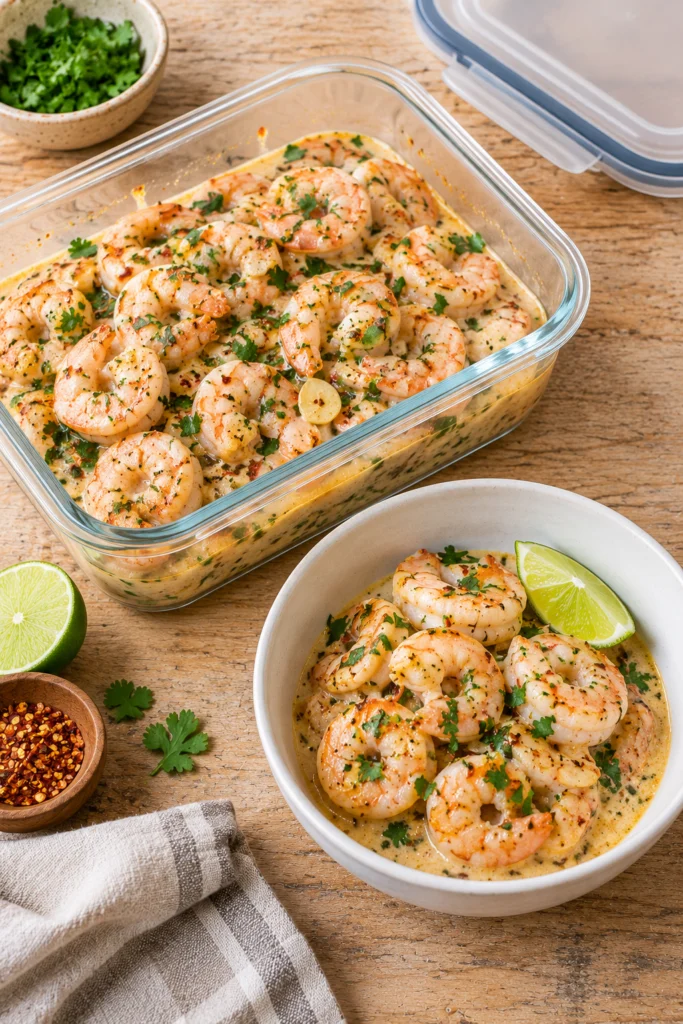
| Method | Duration | Instructions |
|---|---|---|
| Refrigerator | Up to 2 days for best quality | Store in an airtight container and refrigerate promptly. |
| Skillet | A few minutes | Reheat over low heat, stirring gently. Add a teaspoon of water if the sauce needs loosening. |
| Microwave | Short intervals | Heat in 20–30-second intervals, stirring gently between intervals. |
| Freezer | Not recommended for best texture | The coconut sauce may separate and the shrimp may become rubbery after thawing and reheating. |
Storage tip: Reheat only the portion you plan to eat. Warm the shrimp gently until heated through, avoiding prolonged cooking. If the sauce separates slightly, stir it gently over low heat; a small splash of water may help bring it together.
Nutritional Information
The following estimates are per serving, assuming four servings and using the listed quantities of shrimp, full-fat coconut milk, and avocado oil. Values can vary with the brand of coconut milk, shrimp size, and amount of oil absorbed during cooking.
| Nutrient | Approximate Amount per Serving |
|---|---|
| Calories | 400–480 kcal |
| Protein | 35–42 g |
| Total Fat | 26–34 g |
| Total Carbohydrates | 4–7 g |
| Fiber | 0–1 g |
| Net Carbohydrates | 4–6 g |
These values are rough estimates, not laboratory-tested nutrition facts. Coconut milk brands vary in fat and carbohydrate content. The estimates do not include rice, pasta, bread, or other sides. Calculate the nutrition using the exact ingredient labels before publishing precise macro claims.
Frequently Asked Questions
Can I use frozen shrimp?
Yes. Thaw the shrimp completely before cooking. You can thaw them in the refrigerator overnight or place them in a sealed bag in cold water until thawed. Drain and pat them dry before seasoning and searing.
Why is my coconut sauce watery?
The sauce may need more simmering time, or you may have used a thinner coconut milk product. Use full-fat canned coconut milk and let it simmer gently for 3–5 minutes. Avoid adding water unless you need to thin the sauce later.
Is creamy coconut garlic shrimp spicy?
The recipe has a mild kick from the red chili flakes. Reduce the amount or omit them entirely for a milder version. For more heat, add extra flakes or fresh chili.
Can I make this recipe dairy-free?
Yes. The listed ingredients are naturally dairy-free as long as the coconut milk, oil, and seasonings contain no dairy-derived additives. No cream, butter, or cheese is required.
Is this recipe keto-friendly?
It can fit into many keto eating plans because shrimp and coconut milk are relatively low in carbohydrates. However, carbohydrate values vary by coconut milk brand, and serving it with rice or noodles adds carbohydrates. Check the labels and calculate the amount per serving based on your ingredients.
Can I use light coconut milk?
You can, but the sauce will usually be thinner and less rich. If you use light coconut milk, allow extra simmering time and expect a different texture. Full-fat canned coconut milk gives the best creamy result.
Can I prepare the sauce ahead of time?
You can slice the garlic, measure the seasonings, and chop the cilantro in advance. For the best shrimp texture, cook the shrimp shortly before serving. Reheating cooked shrimp for too long can make them rubbery.
Can I freeze creamy coconut garlic shrimp?
Freezing is possible, but it is not the best option for texture. Coconut milk sauce may separate after thawing, and shrimp can become tough. Refrigerating leftovers for up to two days is preferable.
More Recipes You’ll Love
If you enjoyed this quick skillet dinner, try these other recipes from our kitchen:
- Creamy Shrimp Avocado Salad for a Quick High-Protein Lunch — A fresh shrimp meal with creamy avocado.
- Healthy Dijon Baked Salmon — A simple oven-baked seafood dinner with a savory mustard topping.
- High-Protein Creamy Cajun Chicken with Garlic Rice — A bold, creamy dinner for garlic lovers.
- Easy Healthy Avocado Chicken Salad — A convenient lunch with fresh ingredients.
Final Thoughts
Creamy Coconut Garlic Shrimp proves that a satisfying, restaurant-inspired dinner does not need a long ingredient list or hours of cooking. Full-fat coconut milk, fresh garlic, and tender shrimp create a rich sauce with very little effort. Sear the shrimp quickly, simmer the sauce gently, and combine everything just before serving for the best texture. Pair it with rice or vegetables and finish with fresh cilantro and lime for a simple meal worth making again.
Creamy Coconut Garlic Shrimp: A 20-Minute Skillet Recipe
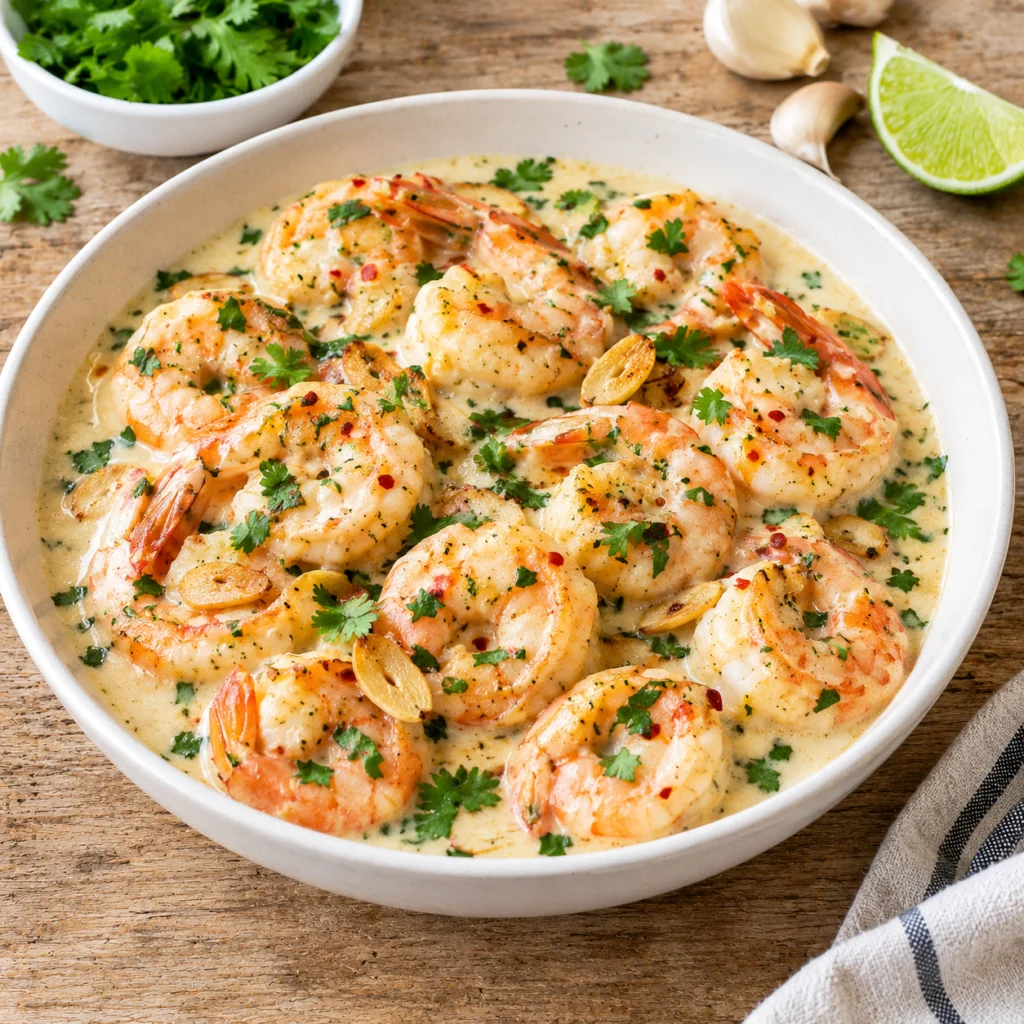
This Creamy Coconut Garlic Shrimp is a quick, flavorful dinner made with juicy shrimp, fragrant garlic, full-fat coconut milk, and a touch of red pepper flakes. The coconut sauce turns silky and rich in just 20 minutes, making this recipe ideal for busy weeknights when you want something satisfying without a long ingredient list. Serve it over jasmine rice, cauliflower rice, or roasted vegetables for an easy meal with a tropical-inspired flavor.
- Large shrimp – 1½ lb (680 g) (Peeled and deveined, preferably 16/20 count)
- Full-fat coconut milk – 1 can (13.5 oz / 400 ml) (Shake or stir before using)
- Garlic – 6 cloves (Thinly sliced)
- Avocado oil – 2 tablespoons (Divided as needed for cooking)
- Dried red chili flakes – ½ teaspoon (Adjust to taste)
- Fresh cilantro – ¼ cup, chopped (For garnish)
- Kosher salt – ½ teaspoon (Adjust to taste)
- Fresh lime juice – Optional (Adds brightness just before serving)
- Prepare and Season the Shrimp
- Sear the Shrimp
- Sauté the Garlic
- Add the Coconut Milk
- Return the Shrimp to the Skillet
- Garnish and Serve
- Dry the shrimp thoroughly: Removing excess moisture helps them sear instead of steam.
- Avoid overcrowding: Cook in batches if your skillet is too small.
- Use canned coconut milk: Full-fat canned coconut milk produces a richer sauce than carton coconut milk beverages.
- Keep the garlic pale: Garlic cooks quickly, so stir constantly and lower the heat if it starts browning too fast.
- Simmer gently: A steady, gentle simmer helps the coconut milk thicken without becoming oily or separated.
- Don't overcook the shrimp: Remove them once opaque and return them to the sauce only long enough to finish cooking.
- Finish with lime: A little acidity balances the richness of the coconut milk.
- Serve right away: The sauce is at its best when freshly made.

Bella is a home cook who turns simple, everyday ingredients into meals worth gathering around. On Finds Your Recipe she shares quick weeknight dinners, cozy comfort food, and easy desserts made for real, busy life — no fancy skills needed, just good food on the table.
Learn more about Bella