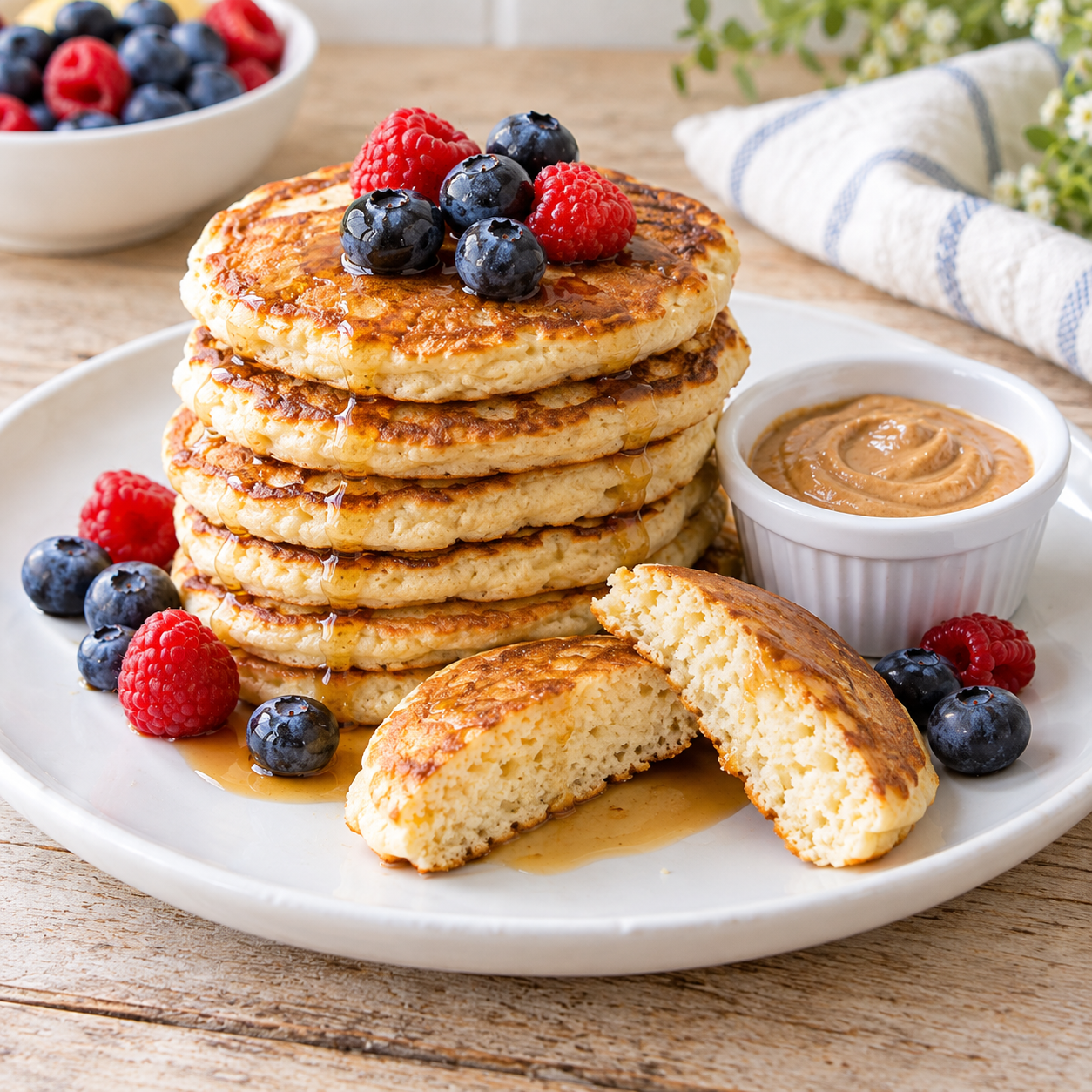
These Keto-Friendly Cottage Cheese Pancakes are soft, satisfying, and easy to make with almond flour, cottage cheese, and eggs. They have a lightly sweet flavor, a tender center, and golden edges without the traditional wheat flour or added sugar. Ready in about 25 minutes, they make a practical low-carb breakfast for busy mornings or a relaxed weekend brunch.
The secret to getting the best texture is using finely ground almond flour, draining excess liquid from the cottage cheese, and cooking the pancakes over medium-low heat. Serve them with sugar-free syrup, a few berries, or a spoonful of almond butter for a delicious keto-friendly breakfast.
Quick facts
- Prep Time: 10 minutes
- Cook Time: 15 minutes
- Total Time: 25 minutes
- Servings: 2–3
- Course: Breakfast or Brunch
- Cuisine: American-inspired
- Difficulty: Easy
- Diet: Low-carb and gluten-free when suitable ingredients are used
Why You’ll Love This Recipe
- Simple ingredients: Almond flour, cottage cheese, eggs, and a few pantry staples make the batter.
- Tender texture: Cottage cheese and eggs help create soft, satisfying pancakes.
- Low-carb alternative: Almond flour replaces traditional wheat flour, making these pancakes suitable for many low-carb meal plans.
- Quick preparation: The batter takes about 10 minutes to prepare.
- Easy to customize: Add cinnamon, lemon zest, or sugar-free chocolate chips to change the flavor.
- Great for meal prep: Cook a batch ahead and refrigerate or freeze the extras for convenient breakfasts.
Ingredients
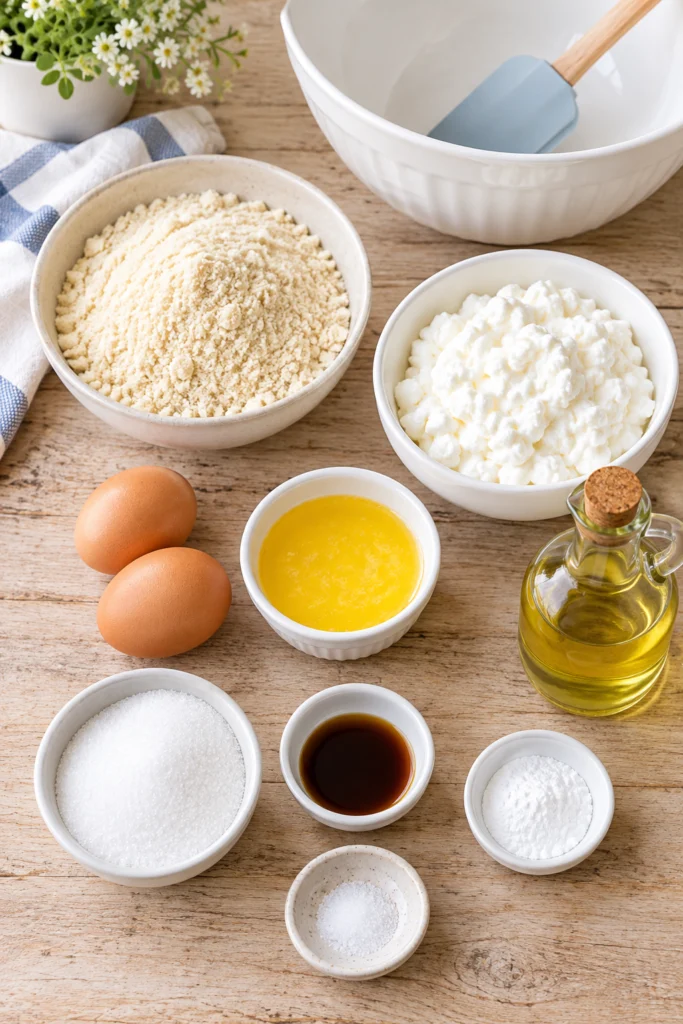
These pancakes use cottage cheese for richness, eggs to bind the batter, and almond flour for structure. A small amount of sweetener and vanilla gives them a classic breakfast flavor without requiring regular sugar.
Ingredients
- ¾ cup (80 g) finely ground blanched almond flour
- ½ cup (100 g) full-fat cottage cheese, drained if watery
- 2 large eggs, preferably at room temperature
- 1 tablespoon unsalted butter, melted and slightly cooled
- 1 tablespoon granulated keto-friendly sweetener
- 1 teaspoon pure vanilla extract
- 1 teaspoon baking powder
- A pinch of fine sea salt
- Cooking oil or butter, for greasing the pan
Ingredient Notes and Substitutions
Almond flour: Use finely ground blanched almond flour for a smoother batter and more delicate texture. Coarse almond meal can make the pancakes heavier.
Cottage cheese: Full-fat cottage cheese adds richness and moisture. If it contains a lot of liquid, drain it before measuring. Small-curd cottage cheese is convenient, but larger curds will also work if the mixture is blended.
Eggs: Eggs bind the almond flour and help the pancakes hold their shape. Room-temperature eggs blend more evenly with the other ingredients.
Butter: Melted unsalted butter adds flavor and helps keep the pancakes tender. Coconut oil or avocado oil can be used instead.
Keto sweetener: Granulated erythritol or a monk-fruit blend works well. Adjust the amount according to the sweetness of your chosen product.
Vanilla extract: Adds a classic pancake aroma. You can omit it for a savory version.
Baking powder: Helps give the pancakes a lighter texture. Check the package label if you need a gluten-free product.
Cooking oil: Avocado oil or coconut oil works well for the pan. Use only a thin coating to avoid greasy pancakes.
Important substitution note: Coconut flour is not a direct replacement for almond flour. It absorbs much more liquid and would require a separately adjusted recipe. Greek yogurt or ricotta may replace cottage cheese, but the moisture and texture will change.
How to Make Keto-Friendly Cottage Cheese Pancakes
The batter is thicker and more delicate than traditional pancake batter, so cook the pancakes gently and flip them only after the edges begin to set.
Step 1: Mix the Dry Ingredients
In a medium mixing bowl, whisk together the almond flour, baking powder, granulated sweetener, and salt. Break up any lumps so the ingredients are evenly distributed.
Step 2: Combine the Wet Ingredients
In a separate bowl, whisk the cottage cheese and eggs until well combined. For a smoother pancake texture, briefly blend them with an immersion blender or food processor.
Stir in the melted, slightly cooled butter and vanilla extract.
Step 3: Make the Batter
Pour the wet mixture into the dry ingredients. Stir gently until a thick batter forms. Avoid overmixing.
Let the batter rest for 5 minutes so the almond flour can absorb some moisture. If the batter becomes extremely thick, add a teaspoon of unsweetened almond milk at a time until it is scoopable.
Step 4: Heat the Pan
Place a nonstick skillet or griddle over medium-low heat. Lightly grease it with oil or butter.
Allow the pan to heat evenly before adding the batter. If the pan is too hot, the outside may brown before the center cooks.
Step 5: Cook the Pancakes
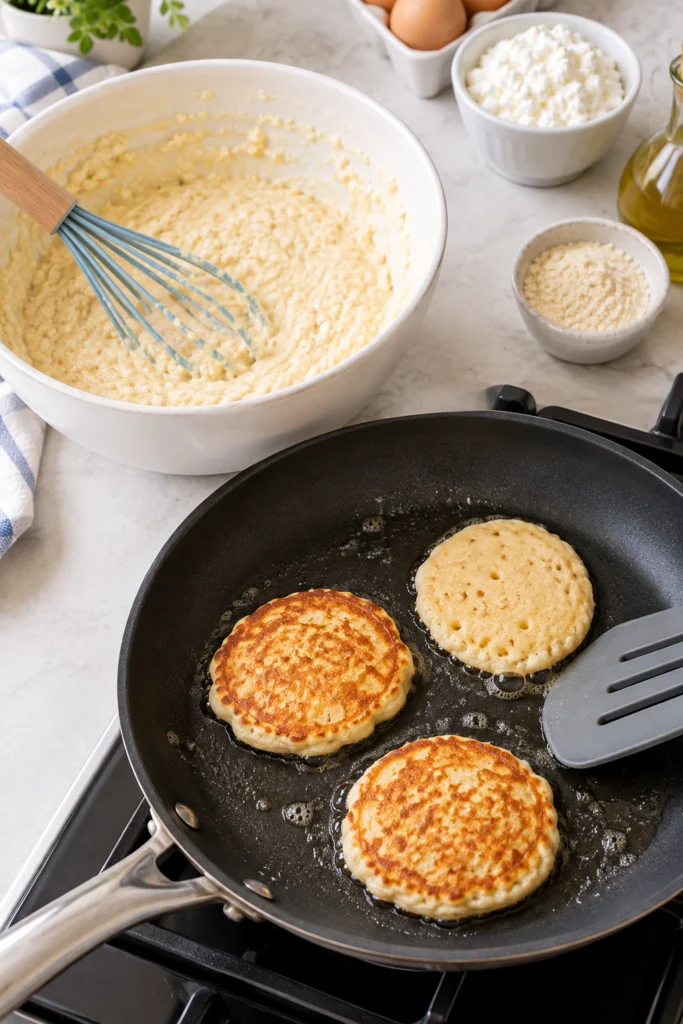
Scoop approximately ¼ cup of batter into the pan for each pancake. Spread it gently into a small circle if needed.
Cook for about 2–3 minutes on the first side, until the edges look set and the surface begins to show small bubbles. These pancakes may not bubble as much as traditional wheat-flour pancakes, so use the firmness of the edges as an additional guide.
Step 6: Flip and Finish Cooking
Carefully slide a thin spatula underneath each pancake and flip it. Cook for another 2–3 minutes, or until the second side is golden and the center is cooked through.
Work in batches, adding a little more oil to the pan if necessary.
Step 7: Serve Warm
Transfer the pancakes to plates and serve warm with your favorite low-carb toppings. Avoid stacking them too tightly while they are steaming, as trapped moisture can soften the browned surfaces.
Pro Tips for Perfect Results
- Drain watery cottage cheese. Excess liquid can make the batter too loose and the pancakes difficult to flip.
- Blend for a smoother texture. If you prefer pancakes without visible cottage cheese curds, blend the cottage cheese and eggs before mixing the batter.
- Let the batter rest. Five minutes helps the almond flour absorb moisture and makes the batter easier to handle.
- Use medium-low heat. Almond-flour pancakes brown quickly, so gentle heat helps the centers cook without burning the outsides.
- Make smaller pancakes. Smaller rounds are easier to flip and less likely to break.
- Wait before flipping. The edges should look set and the underside should be golden before you turn the pancake.
- Keep finished pancakes warm. Place them on a baking tray in a low oven while cooking the remaining batter.
Common Mistakes to Avoid
Using watery cottage cheese: Too much liquid can make the pancakes fragile. Drain the cottage cheese before mixing if necessary.
Cooking over high heat: The pancakes can brown too quickly while remaining undercooked in the center. Reduce the heat and allow them to cook gently.
Making the pancakes too large: Large pancakes are harder to flip because almond-flour batter lacks the elasticity of wheat-flour batter. Start with smaller portions.
Flipping too early: If the first side has not set, the pancake may tear. Wait until the edges look firm and the underside is golden.
Adding too much extra liquid: The batter should be thick and scoopable. If it seems too thick, add liquid in small increments rather than pouring in a large amount at once.
Expecting traditional wheat-flour texture: These pancakes are tender and satisfying, but their texture will be slightly different from classic flour-based pancakes.
Variations
- Sugar-Free Chocolate Chip: Fold a small handful of sugar-free chocolate chips into the batter before cooking.
- Lemon Cottage Cheese Pancakes: Add 1 teaspoon of finely grated lemon zest for a fresh citrus flavor.
- Berry Pancakes: Add a few chopped raspberries or blueberries to each pancake as it cooks. Keep the quantity modest to help maintain a low-carb serving.
- Cinnamon Pancakes: Add ¼–½ teaspoon of ground cinnamon to the dry ingredients.
- Savory Cottage Cheese Pancakes: Omit the sweetener and vanilla. Add chopped chives, black pepper, and a pinch of garlic powder, then serve with avocado or a fried egg.
- Extra-Rich Pancakes: Add a small spoonful of cream cheese to the wet mixture, blending until smooth. The batter may need a little adjustment in consistency.
Serving Suggestions
These cottage cheese pancakes work with both sweet and savory toppings.
- Sugar-free maple-style syrup: A classic pancake topping without regular syrup.
- Fresh berries: Add a small serving of strawberries, raspberries, or blueberries.
- Unsweetened whipped cream: A little whipped cream makes the pancakes feel more like a weekend brunch treat.
- Nut butter: Almond butter or peanut butter adds richness and flavor.
- Scrambled eggs or bacon: Serve alongside eggs or bacon for a more substantial breakfast.
- Avocado: Pair savory pancakes with sliced avocado and herbs.
- More breakfast ideas: Try High-Protein Cottage Cheese Breakfast Tacos for a savory alternative or Easy Healthy Protein Waffles for another breakfast option.
Storage and Reheating
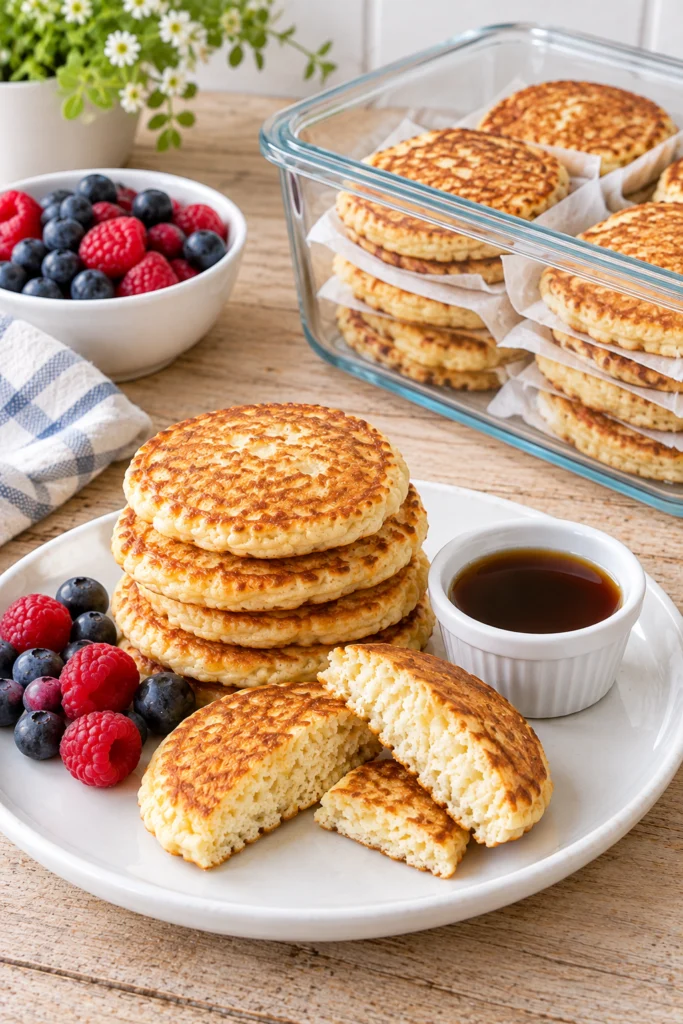
Allow the pancakes to cool before packing them away. Store toppings separately so the pancakes do not become soggy.
| Storage method | Duration | Instructions |
|---|---|---|
| Refrigerator | 3–4 days | Store cooled pancakes in an airtight container. Separate layers with parchment if needed. |
| Freezer | 1–2 months | Freeze in a single layer first, then transfer to a freezer-safe bag or container with parchment between layers. |
| Microwave reheating | 30–60 seconds | Heat on a microwave-safe plate until warmed through. Start with less time and add more as needed. |
| Skillet reheating | 2–3 minutes per side | Warm over medium-low heat with a light coating of oil or butter. |
| Oven reheating | About 5–8 minutes | Place on a baking tray and warm at 300°F (150°C) until heated through. |
For a convenient breakfast, freeze the pancakes in individual portions. Thaw them in the refrigerator overnight or reheat directly from frozen, allowing additional time as needed.
Nutritional Information
The following values are rough estimates, based on the listed ingredients and an assumed yield of 2–3 servings. The actual values will depend on your cottage cheese, almond flour, sweetener, cooking fat, and portion size.
| Nutrient | Estimated amount per serving |
|---|---|
| Calories | 300–350 kcal |
| Fat | 20–25 g |
| Net Carbohydrates | 5–7 g |
| Protein | 15–20 g |
| Fiber | 3–4 g |
These estimates are not verified calculations. For accurate nutrition information, calculate the entire recipe using the labels of your specific ingredients, include any cooking fat used, and divide the totals by the number of servings.
Frequently Asked Questions
Can I make the batter ahead of time?
You can prepare the batter and refrigerate it for up to 24 hours, but the texture may thicken as the almond flour absorbs moisture. Stir gently before cooking and add a small splash of unsweetened almond milk if necessary. For the most consistent results, cook the pancakes fresh.
How do I store leftover cottage cheese pancakes?
Let the pancakes cool, then place them in an airtight container in the refrigerator for 3–4 days. For longer storage, freeze them for 1–2 months.
Can I make these pancakes without almond flour?
You can use another flour, but the recipe will need adjustments. Coconut flour absorbs much more liquid than almond flour and cannot be substituted in equal amounts. A separately tested recipe is best for reliable results.
Can I use low-fat cottage cheese?
Yes, but low-fat cottage cheese may contain more moisture or produce a less rich texture. Drain excess liquid and check the batter consistency before cooking.
Why are my pancakes falling apart?
The batter may be too wet, the pancakes may be too large, or you may be flipping them before the first side has set. Drain watery cottage cheese, cook smaller pancakes, and wait until the edges are firm before turning them.
Are these pancakes suitable for a keto diet?
They can fit into a low-carb or ketogenic eating plan when made with suitable ingredients and portion sizes. Check the nutrition labels for the cottage cheese, almond flour, and sweetener, then calculate the net carbohydrates for your serving.
Can I make the pancakes dairy-free?
The recipe relies on cottage cheese and butter for much of its texture and flavor. Dairy-free alternatives may work, but the result will differ and will require testing. Replacing the eggs with flax eggs can also make the pancakes more fragile, so it is not a direct swap for the original recipe.
What toppings work best for keto pancakes?
Sugar-free syrup, a small serving of berries, unsweetened whipped cream, nut butter, or a little cinnamon are all good options. For a savory breakfast, omit the sweetener and vanilla and serve the pancakes with avocado or eggs.
More Recipes You’ll Love
- High-Protein Cottage Cheese Breakfast Rounds — another cottage-cheese breakfast option.
- Easy High-Protein Blueberry Cottage Cheese Muffins — a blueberry breakfast bake for make-ahead mornings.
- High-Protein Cottage Cheese Bagels — a simple homemade option for a savory breakfast.
- Easy No-Bake Protein Balls — a convenient snack to prepare ahead.
Final Thoughts
These keto-friendly cottage cheese pancakes are a simple way to enjoy a warm, satisfying breakfast without traditional flour. Almond flour, cottage cheese, and eggs create tender pancakes that work with sweet or savory toppings. Keep the heat moderate, make the pancakes small, and let each side set before flipping for the best results.